Fantasy Legend Mark Poole Joins Sorcery: Contested Realm
Published 9 November 2026“Why aren’t you doing Sorcery?”
Mark Poole has heard that question for years while signing cards for fans at Gen Con and at smaller shows closer to home. After all, he’s one of the fantasy illustrators who helped define the look of trading card games in their earliest days.
Now he can finally tell those fans what he’s been working on in a new Realm.
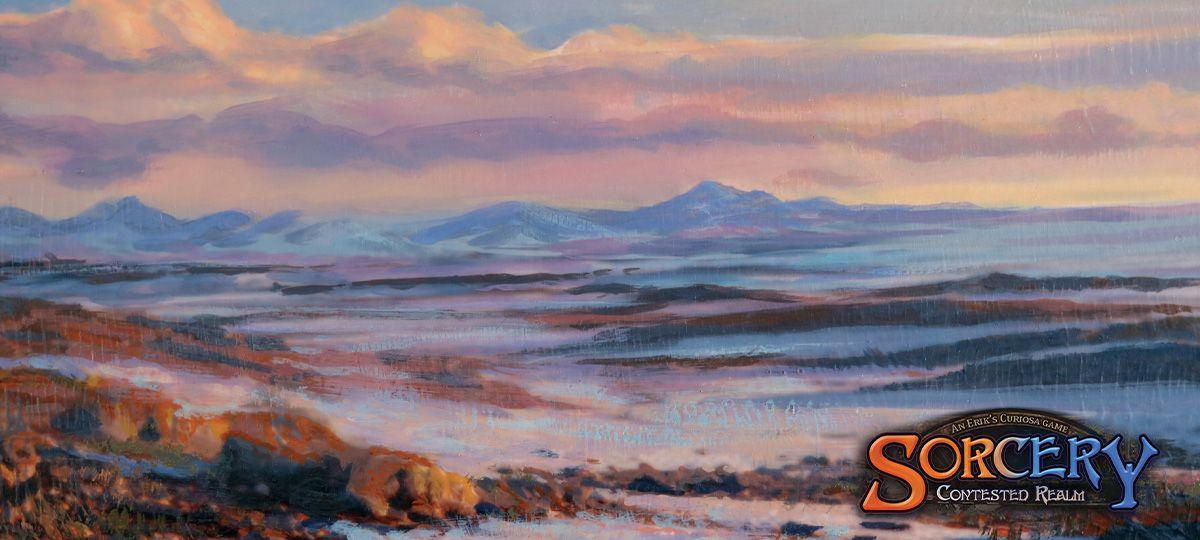
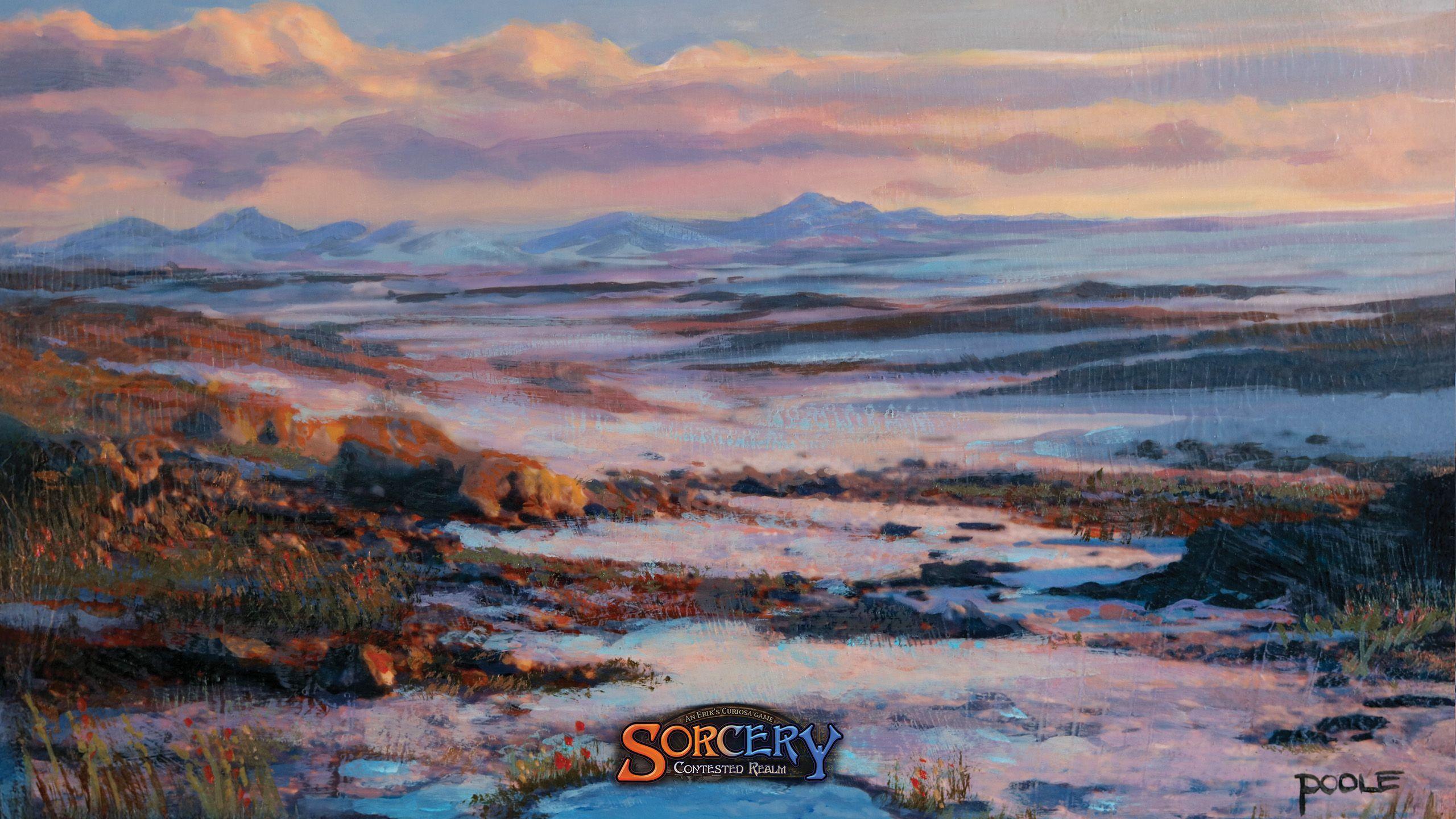
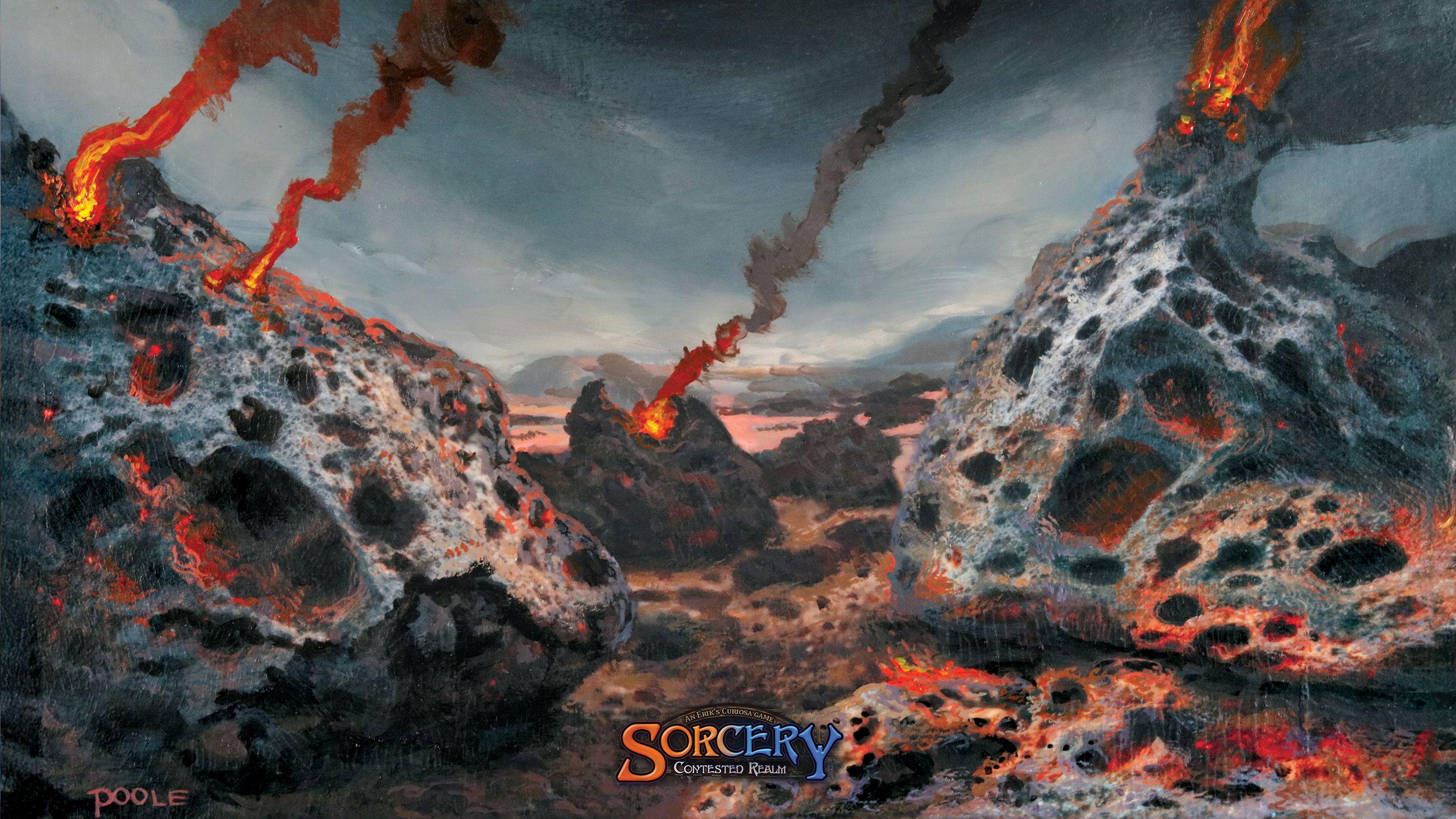
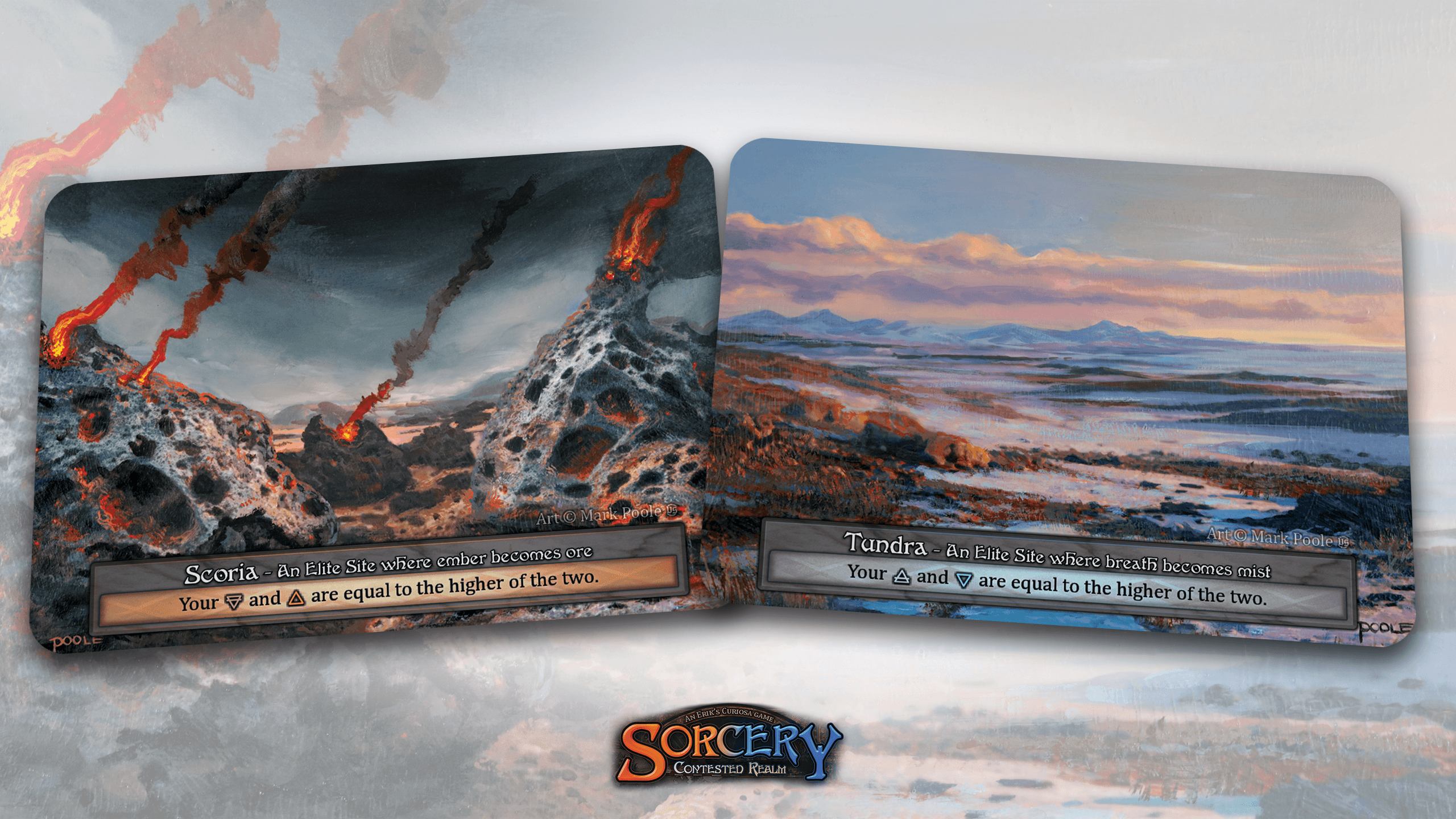
We’re excited to welcome Mark to Sorcery: Contested Realm. His first two paintings for the game, Tundra and Scoria, make their debut in Frost Mage vs. Lavamancer.
"Do More of This"
Mark has a straightforward way of describing himself. "I'm an artist. I'm a gamer, I'm a big nerd, I'm a comic book reader," he says. "I'm just a young kid at heart. Still am."
When he was younger, that kid wanted to draw comics. While working on Deathlok samples, Mark brought his portfolio to a small comic show where Bernie Wrightson, Al Williamson, and Mike Mignola were reviewing artists' work. The feedback was tough. By the time he'd made his way through the tables, he was running out of confidence.
"I was just bleeding out," he recalls.
He'd saved Wrightson, his favorite artist, for last. The legendary illustrator offered some familiar advice about drawing hands and feet, then came across a painting tucked into the back of the portfolio. It was an airbrushed image of a girl standing on a cliff, looking out toward a castle.
"He pulled it out and said, 'Whoa, what is this? Do more of this,'" Mark says.
That was all he needed to hear. "My wounds healed up, I went home, and I really started pushing what I wanted to do as a painter."
Mark had been playing Dungeons & Dragons since the mid-'70s, so fantasy gaming was already familiar territory. He took Wrightson's advice to Gen Con, where a career in fantasy illustration began to take shape.
Making a living as an artist wasn't easy, especially in those early years. Role-playing game covers might pay a few hundred dollars, and painting had to fit around whatever other work he could find. "I've painted people's cats. I've painted houses," he laughs. "I've tried everything to make a living at art since I was 16 or 17."
These days, with four decades of experience behind him, Mark is still looking for new things to try. "There's no resting place for me," he says. "The attachment is the journey, chasing where my visions are going."
Joining the Family
Many of Mark's longtime friends in the fantasy art world are already part of Sorcery. Jeff A. Menges, Melissa Benson, and Drew Tucker are among them, as is Rodney Matthews, an artist Mark has admired for years.
He's known many of these artists for decades, and watching them contribute to the game made him feel like he was missing out on something.
"It's like a big family I already know, but I wasn't at the family reunions."
Now that he's joining them, the feeling is a little like coming home. "It's like a good high school reunion, where you had a great high school experience," he says. "There's a comfort to the soul."
Mark has no intention of taking it easy, though. He spent about a decade training in judo, and he still enjoys a good challenge. That competitive streak carries over into his work.
"I'm a scrapper. I like that fight," he says. "All my good art buddies are doing their best, and I love to see it. I want to make an impact for the community and for my fellow OG guys. I want to come out swinging."
The way Sorcery approaches its artwork also appeals to him. Artists work in traditional media, receive a short prompt, and have room to decide where to take it. That's not always how things work in the illustration industry.
"The industry doesn't really set itself up for allowing artists to be free," he says. "Jumping into the deep end and swimming with the big fishes, that's where it's at as an artist."
Finding Beauty in Tundra and Scoria
Mark's first assignment was Tundra. At first, the prompt didn't seem to offer much to work with.
"It sounds boring, flat, nonexistent," he admits. "But to me, that's where the magic is."
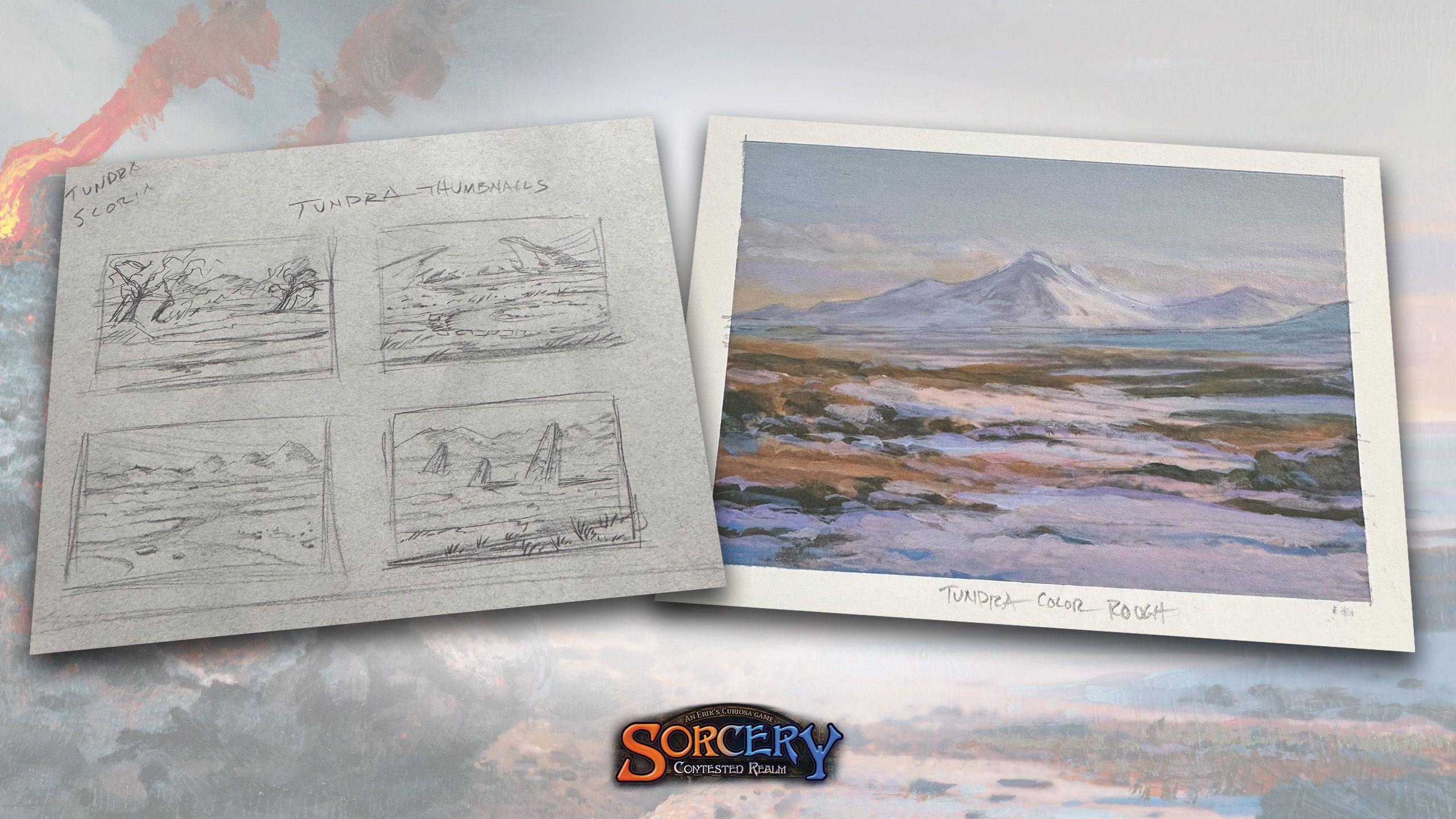
He began with four thumbnails, exploring different ways to approach the landscape. He considered adding obelisks, snow buffalo, and strange objects floating in the distance before settling on a quieter composition. Next came a small 5x7 color study, which helped him work out the atmosphere before moving to the final painting.
His process involves building up the surface before the actual painting begins. He works the board with sponges and old brushes, creating texture that will influence how the paint behaves.
"When I put the paint down, it lands weird. If I rake across it, it picks up just the highlights," he explains. "It adds chaos, and in the chaos I find beauty."
Without figures or other obvious focal points, the landscape has room to breathe. Color and texture do much of the work.
"You see this vast, cold, quiet place," Mark says. "That's the playground I really like staying in."
The original painting has plenty of detail that can be easy to miss in a reproduction. "On the original you'll see all the valleys, the little bubbles, the thinner paint falling into the shadows."
For Scoria, Mark went looking for inspiration a little closer to home. His reference material? The lava rocks in his own gas grill.
The painting takes those familiar, porous stones and gives them a new setting. Against a muted gray background, small pockets of glowing heat bring the surface to life. It's a very different subject from Tundra, and a new kind of painting for Mark.
"It was something I'd never painted," he says, "which is always great."
The People Behind the Game
After all these years of conventions, Mark has collected plenty of stories about the people he's met along the way.
There's the father who brought his child to Gen Con year after year for twenty years, and now returns with grandchildren. There's also the fan who makes the trip carrying cards that belonged to his late father.
Those encounters mean a lot to Mark. He takes the time to meet people, even when the line gets long.
"I don't care how long the line gets," he says. "I want to make eye contact and ask, why do you play this game? This is your moment."
It's something he hopes to bring to his work for Sorcery, too. His paintings don't necessarily feature the dragons, creatures, or armies players might expect from fantasy art. Instead, he hopes people will spend time with the landscapes and find something personal in them.
"I hope they can see the subtle emotional emphasis I put into these pieces," he says. "That's always been my storytelling, even through basic landscapes and color palettes."
And what about all those players who spent years asking when he'd finally paint for Sorcery?
He's got an answer now.
"I'm a Sorcery artist. Come by the booth, I don't care where we're at. Just come say hi, and let's talk Sorcery."
Find more of Mark's work at https://markpoole.com/
Welcome to the Realm, Mark.